
Why are tickets so expensive?

Industry Monopoly
Live Nation is a multinational entertainment company that dominates the industry. Through their ownership of concert venues, management of artists, and control of ticketing by merging with Ticketmaster, they now hold 86% of the concert market share (Neumeister, 2026). Without competition, and therefore the need for competitive pricing, Live Nation can make tickets more expensive.

Scalping and Resale
Scalping is the practice of buying tickets and reselling them at a higher price. Scalpers typically use automated bots to snatch tickets as soon as they’re available, later listing them on secondary sites like StubHub to make profit. Scalping creates a false demand and exploits fans who were unable to buy tickets during the original sale.

Dynamic Pricing
Ticketmaster uses dynamic pricing to adjust ticket prices based on current demand. Algorithms recognize high-demand events through elevated ticket sales, and they accordingly raise prices higher than the original face value. This rise can cause tickets to surge by hundreds in just a few minutes.

Hidden Fees
Sites like Ticketmaster often include additional charges that don’t appear until checkout. These usually consist of processing fees, service charges, or venue fees, but they increase the total cost by an average of 25% (Snapes, 2025).

Touring Reliance
Touring is now a main revenue source for artists. While artists historically made most of their money through record sales, digital streaming has taken over. However, platforms like Spotify typically pay artists $0.003 to $0.007 per stream (Royalty Exchange, 2025), causing many to rely on touring to make serious money.
Take a look at how much ticket prices have increased over the years.
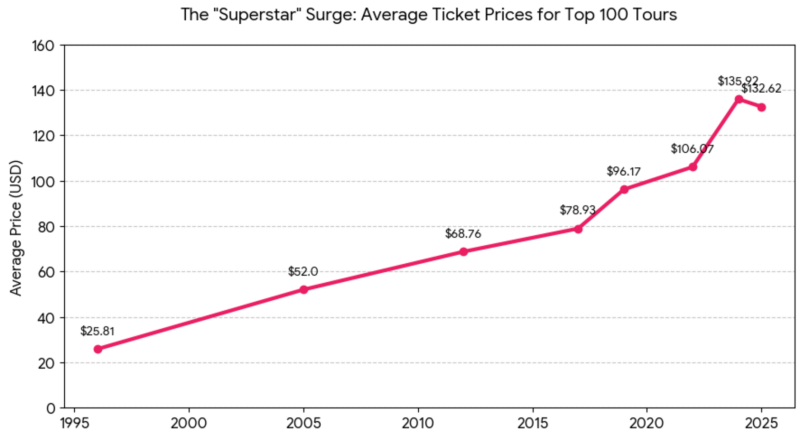
Pollstar. (2025). Mid-Year Touring Charts: Average Ticket Prices for Top 100 Worldwide Tours. Retrieved from https://news.pollstar.com
Create Your Own Website With Webador